The Executive Committee of the Associated Student Government is officially composed of the President, Vice President, Secretary, Treasurer, the Chair of Senate, the Chief of Staff, the Chief Justice, and the Freshman Leadership Coordinator. The President, Vice President, Secretary, and Treasurer are directly elected in a University-wide election; the Chair of Senate and Chief Justice are elected internally by their respective branches, and the Chief of Staff and Freshman Leadership Coordinator are appointed via an application and interview process.
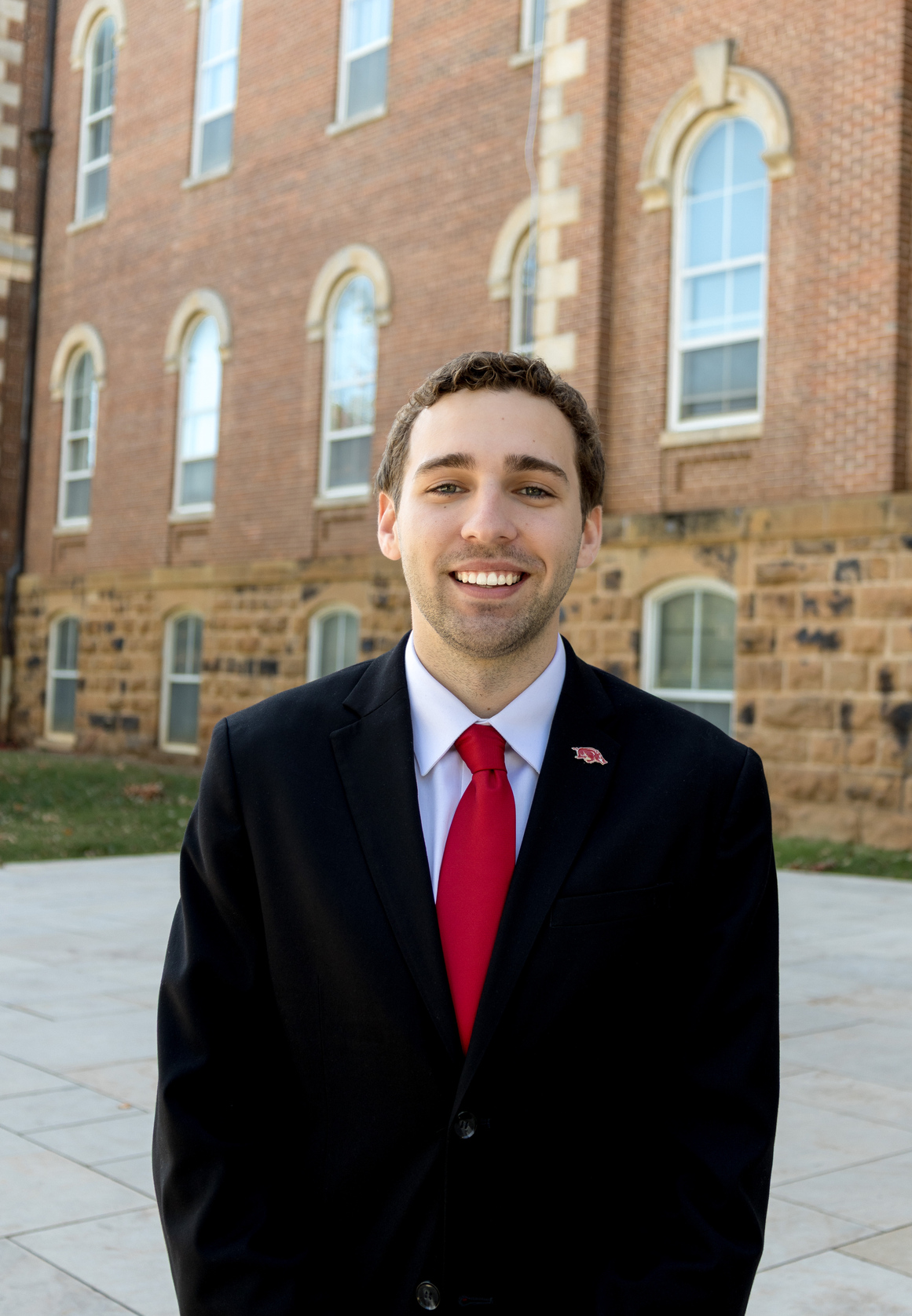
Logan Williams
President
The ASG President serves as the official representative of the undergraduate student body, acting as a liaison between students, university administration, and external stakeholders. The President chairs key committees such as the Safe Ride Committee and the Program Allocations Board (PAB) while serving on university-wide committees like the Campus Council and the Fayetteville Town and Gown Committee. A primary responsibility is overseeing ASG governance, which includes presiding over Executive Council meetings, appointing and managing the Executive Cabinet, and approving Cabinet-level duties alongside the Chief of Staff. The President supervises Executive Cabinet positions, including the Presidential Assistant, Director of Parking & Transit, Director of the Student Poll, and Director of Safe Ride. The President should also attend at least eight Senate meetings per semester and monthly meetings with both the Chancellor and Vice Chancellor for Student Affairs.
Additionally, the President issues Executive Orders to structure the Executive Branch and Presidential Proclamations to express ASG’s stance on key issues. The President also has the authority to veto or approve legislation with a line-item veto on financial bills. Regular reporting is required, including providing legislative updates at each Senate meeting, delivering a State of the Student address each semester, and compiling an End-of-Year Report on ASG initiatives. The President is also responsible for ensuring smooth transitions within ASG by facilitating new student orientations and working closely with incoming Senators. Office hours are set at a minimum of 20 hours per week, with at least 10 hours scheduled in the ASG office across at least three business days to maintain accessibility for students and ASG members.
asgpres@uark.eduFaith Seddig
Vice President
The ASG Vice President plays a crucial role in student representation by managing appointments to university committees and acting as a key liaison between students and administration. This includes overseeing the University Committees application process, ensuring student representation aligns with university governance needs. Additionally, the Vice President is responsible for planning and executing special events such as the ASG Honorary Family Program during Family Weekend, the Chancellor’s Ball, and the annual Dr. Martin Luther King Jr. celebration. The Vice President also works with the Student Alumni Board to coordinate the selection of the Faculty Member of the Year.
The Vice President must attend at least eight Senate meetings each semester and serve as a voting member of the Program Allocations Board (PAB). Executive oversight includes appointing and managing key Cabinet members, such as the Vice Presidential Assistant and the Director of Vice Presidential Programming. The Vice President also supervises the Director of Athletics, the Associate Director of Athletics, and the Director of Alumni & Student Engagement. The Vice President's office hours are set at a minimum of 18 hours per week, with at least 10 hours scheduled in the ASG office over a minimum of three business days.
asgvp@uark.edu

Kendal Nobrega
Secretary
The ASG Secretary oversees ASG’s communication and documentation, ensuring transparency and effective information dissemination. Responsibilities include acting as the primary liaison between ASG and media outlets, overseeing ASG’s website and social media accounts, and publishing minutes from Executive Committee and Senate meetings within designated timeframes. The Secretary leads the ASG Marketing team, which includes the Associate Secretary, Director of Marketing, Director of Internal Communications, Director of External Communications, Director of Photography, and Director of Graphic Design.
The Secretary is also responsible for maintaining the ASG Newsletter, sending weekly email updates about ASG activities, and advertising Senate and Executive elections in coordination with the Judicial branch and Division of Student Affairs. The Secretary should work a minimum of 15 hours per week, with at least 10 scheduled office hours spread across three business days. The Secretary should be familiar with and follow ASG’s constitution and governing documents.
asgsec@uark.eduAndrew Kingrey
Treasurer
The ASG Treasurer manages the organization's finances and ensures transparency and accountability in allocating student funds. This involves maintaining detailed financial records, reconciling ASG’s financial transactions, and providing accurate budget reports when requested. The Treasurer chairs the Office of Financial Affairs (OFA) and oversees the distribution of funding to Registered Student Organizations (RSOs). At the beginning of each semester, the treasurer prepares and presents a comprehensive budget and submits an annual operating budget to the Senate. Additionally, the Treasurer is a voting member of the Program Allocations Board (PAB), playing a critical role in funding decisions for student organizations.
Executive responsibilities include managing the Deputy Treasurer, who supports daily financial operations, and ensuring a smooth transition of financial records at the end of each term. The Treasurer must attend weekly OFA meetings, at least eight Senate meetings per semester, and is required to work a minimum of 18 hours per week, with at least 10 of those hours scheduled in the ASG office over at least three business days. The Treasurer should be familiar with and adhere to ASG’s constitution and governing documents.
asgtres@uark.edu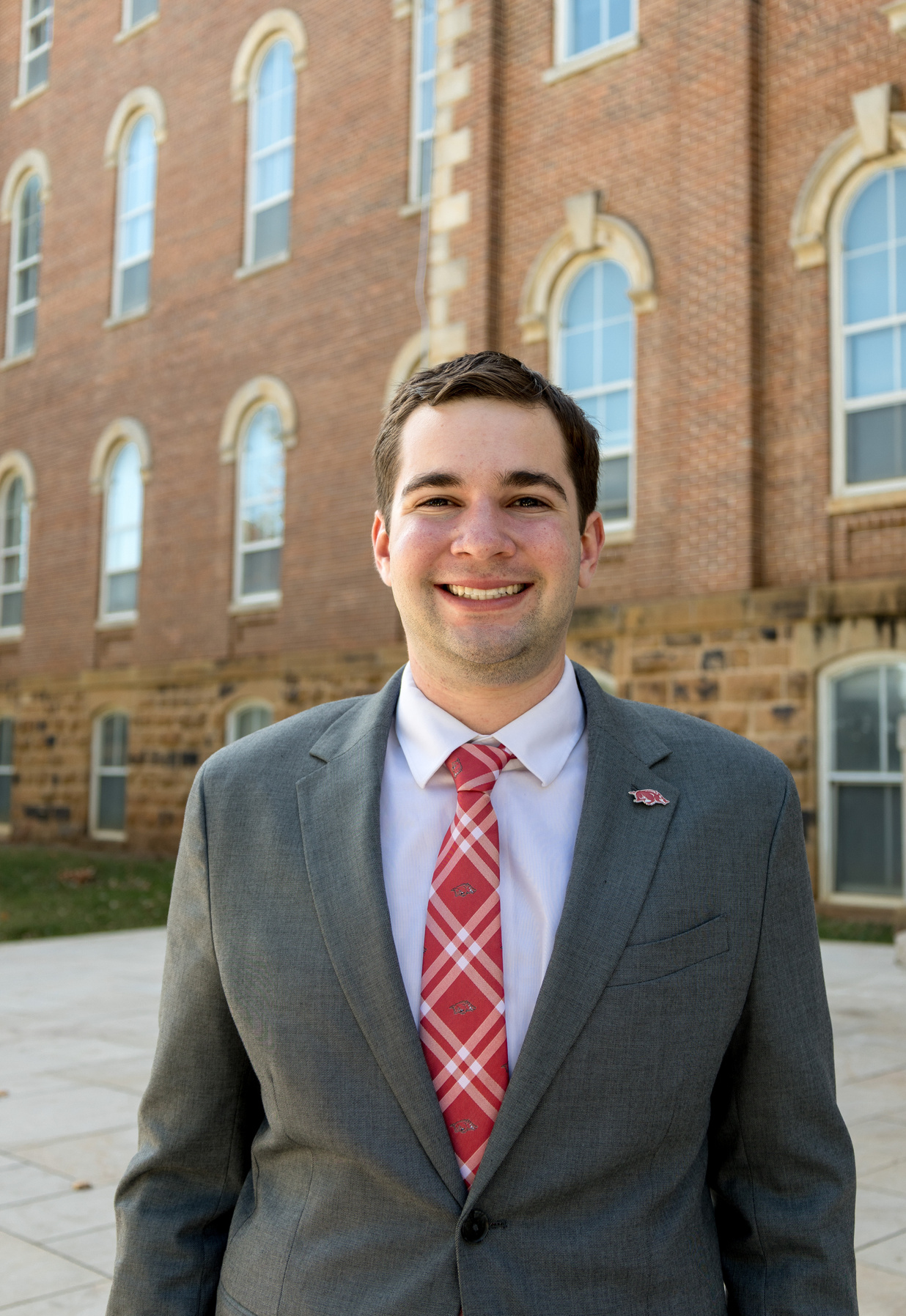
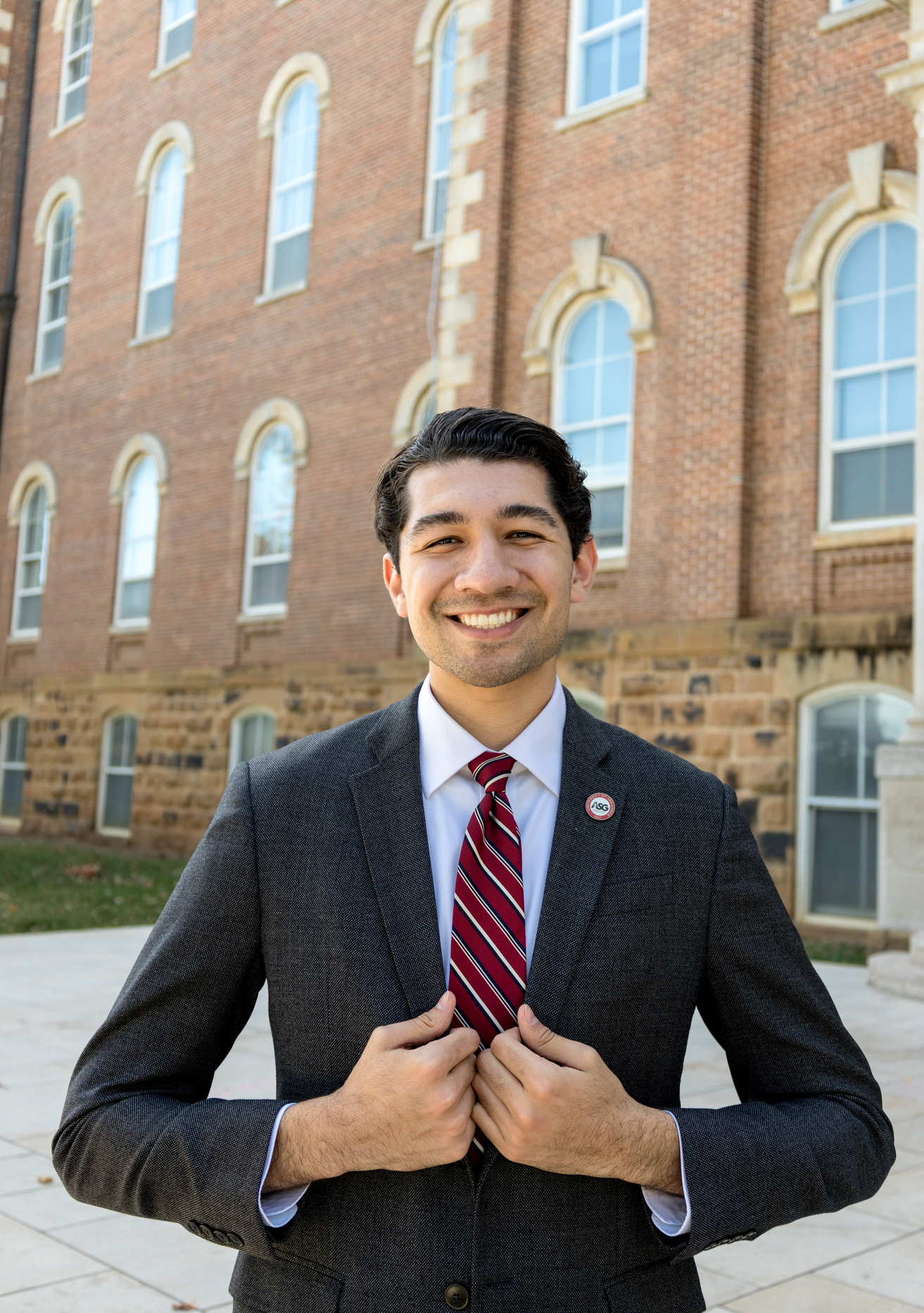
Luis Maya
Chair of Senate
The Chair of the Senate serves as the presiding officer of the ASG Senate, overseeing legislative sessions, maintaining order, and ensuring compliance with parliamentary procedures. This position leads the Senate Leadership Council, which is comprised of 11 senators who oversee specific Senate committees and responsibilities. The Chair is also responsible for setting and publishing Senate meeting agendas, interpreting and enforcing Senate rules, and updating legislative records to reflect passed legislation.
Additionally, the Chair arranges meeting spaces, coordinates technology for presentations, and ensures that legislative materials are accessible to senators and guests. The Chair collaborates with university administrators to organize presentations to the Senate on significant student issues. The Chair of the Senate votes only to break or create a tie and is crucial in ensuring legislative efficiency and transparency. The Chair leads weekly Senate meetings on Tuesdays at 6:30 p.m. Office hours total a minimum of 15 hours each week, with at least 10 hours regularly scheduled in the ASG office across a minimum of three business days.
asgsen@uark.eduAnna Abston
Chief Justice
The Chief Justice leads the ASG Judicial Branch, overseeing legal interpretations, ethical reviews, and dispute resolutions within ASG. Responsibilities include running Senate, Executive, and Homecoming elections, reviewing allegations of constitutional violations, interpreting ASG governing documents, and conducting hearings on ethics complaints and election disputes. The Chief Justice also participates in judicial appointments, collaborating annually with the ASG President to select new Justices for Senate approval.
Additionally, the Chief Justice ensures that ASG operates within the confines of university policy and federal and state laws, providing legal oversight on all ASG actions. Although office hours for the Chief Justice are not explicitly defined, they must be adequate to manage judicial responsibilities effectively.
asgjcj@uark.edu

Abby Shoemaker
Chief of Staff
The Chief of Staff is responsible for the internal coordination and efficiency of the ASG Executive Branch. This role involves managing the Executive Cabinet, which consists of over 50 individual positions, organizing bi-weekly Cabinet meetings and weekly Cabinet Leadership meetings, and ensuring direct communication among Cabinet members and Executive Officers. The Chief of Staff plays a vital role in strategic planning by assisting the President and Vice President in setting initiatives and ensuring that each Cabinet member’s work aligns with ASG’s overarching goals.
Additional responsibilities include organizing the annual All-ASG Retreat with Senate leadership, allocating initial programming budgets for Cabinet initiatives, and overseeing Executive Cabinet appointments. The Chief of Staff must attend at least eight Senate meetings each semester. Office hours require a minimum of 15 hours per week, including 10 regularly scheduled hours in the ASG office spread over at least three business days. The Chief of Staff should be familiar with and adhere to ASG’s constitution and governing documents.
asgcos@uark.eduDylan Hall
Freshman Leadership Forum Coordinator
The FLF Coordinator is responsible for managing the Freshman Leadership Forum, a program designed to integrate first-year students into ASG and overall campus leadership. FLF emphasizes professional development, mentorship, and service by organizing and executing simulations, workshops, engagement activities, community service, an intra-organizational mentorship program, and more. The FLF Coordinator delegates the planning of these events to their respective staff members while maintaining oversight throughout the process. Although staff members mentor their small groups throughout the year, the FLF Coordinator serves as a mentor to all FLF members and is encouraged to meet with every member and staff member at least once per semester.
Additionally, the FLF Coordinator determines the program's overarching schedule, theme, and atmosphere. This involves selecting staff members, leading the recruitment process, choosing FLF members, setting the agenda for each meeting, and suggesting dates and content for service or engagement events. As the primary goal of FLF is to help student leaders build the skills and networks necessary for success, it is beneficial for the FLF Coordinator to be well-connected and eager to facilitate connections among members.
asgflf@uark.edu